




























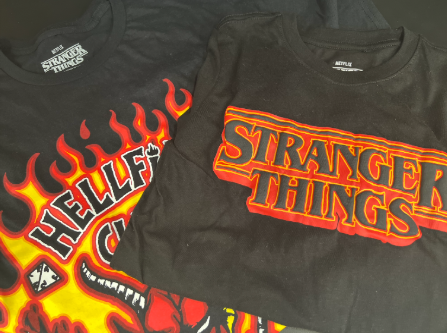
When “Stranger Things” premiered on Netflix in July 2016, it quickly became more than just a television series. Over nearly a decade, it grew into a cultural cornerstone that blended nostalgia, horror, and emotional storytelling to center characters who felt real, representing everyone who ever felt like an outcast. By the time the show aired its final episode on December 31, 2025, expectations were sky-high. For many fans, however, the ending did not feel like the natural conclusion to a story with which they had spent years growing up.
There is no denying the show’s impact. “Stranger Things” earned widespread critical acclaim throughout its run, receiving dozens of major award nominations and winning multiple Primetime Emmy Awards, including recognition from the Screen Actors Guild for Outstanding Ensemble. The series also helped launch the careers of actors such as Millie Bobby Brown, Finn Wolfhard, and Noah Schnapp. Yet the strength of its legacy may have worked against it. A show so deeply embedded in its audience’s lives was always going to face intense scrutiny when it ended, and the divided reception of the finale reflected that pressure.
Beyond critical praise, “Stranger Things” remains one of Netflix’s most valuable intellectual properties. According to 2025-2026 industry reports and analytics, since 2020, the series has generated over $1 billion in global streaming revenue, driven more than two million new subscriber sign-ups, and contributed an estimated $1.4 billion to the U.S. economy through production spending and job creation. For its final season, production budgets reportedly reached between $400 and $480 million, underscoring the immense expectations placed on the show’s conclusion. With stakes that high, satisfying every fan was always going to be a near-impossible task.
[Warning: Plot spoilers ahead!] Rather than offering closure, the final episode left many viewers questioning fundamental elements of the story. Fans debated why the Upside Down appeared frozen in time, what Vecna’s true motivations were, and why Will, a character who was connected to the hive mind, seemed strangely unaffected by events that should have had lasting consequences. These unanswered questions led some viewers to feel that the finale raised more confusion than resolution. As Chloe Blechner ’29 explained, “I didn’t hate it; I thought it was a nice ending in theory. However, it wasn’t well-executed, and there were too many plot holes; it left me with more questions than it answered.”
This sense of dissatisfaction soon moved beyond simple criticism and into widespread speculation. On TikTok and other social media platforms, fans began rewatching the finale and pointing out what they believed were inconsistencies in dialogue, character behavior, and small visual details. From this scrutiny emerged “Conformity Gate,” a viral fan theory that reframed the ending entirely.
According to the theory, the seemingly peaceful finale was not real, but instead a carefully constructed illusion created by Vecna, the show’s main antagonist. Supporters of Conformity Gate argued that the characters never truly escaped his control and were instead trapped in a false reality, which they claimed explained why the ending felt emotionally hollow or unfinished to some viewers. Fans pointed to perceived continuity errors and symbolic imagery as “evidence,” using these details to justify the belief that the story was not actually over.
The theory went even further, predicting that Netflix would release an additional secret episode in January to reveal the “real” ending. Although the theory was eventually disproven, its rapid spread reflected how deeply invested audiences were in the series and how difficult it was for some fans to accept a conclusion that did not align with their expectations.
When looking at what sparked “Conformity Gate,” we can see that it speaks to something deeper than hope for more content. As Georgia Cejudo ’29 explained, “I think the reason so many fans decided to believe in ‘Conformity Gate’ was that it was better than accepting a show that had been in production for around 10 years, now had become more about what the audience at large wanted.”
For many fans, the theory resonated because it addressed what felt emotionally wrong about the finale. “For a show about misfits and outcasts to conform to fit the General Audience was disappointing,” Georgia Cejudo ’29 said. Her thought reflects a broader concern that the show abandoned its original themes in favor of a safer, more conventional conclusion.
Another major source of controversy centered on the fate of Eleven, whose apparent death sparked intense debate among fans. For many viewers, the moment felt emotionally charged but narratively unsatisfying, raising questions about whether the show fully committed to the consequences it had built toward over multiple seasons.
In addition, many fans pointed to the final battle itself as a key reason for their frustration. The confrontation with Vecna, a villain responsible for years of destruction and trauma, lasted only about six minutes. For longtime viewers, this brief fight undermined the sense of danger that had defined earlier seasons and diminished the weight of the characters’ long struggles. When compared to previous finales that devoted entire episodes to a single, high-stakes conflict, the short confrontation felt rushed, leaving some fans feeling that the ending lacked the emotional payoff they had been expecting.
Beyond pacing, some fans felt that character decisions actively contradicted years of development. Changes in costuming, relationship arcs, and character placement fueled the belief that the ending prioritized surface-level resolution over internal consistency and satisfying ends to character arcs that had been built for years. These choices, combined with the show’s refusal to directly address fan criticism, further deepened the divide on the finale. The labeling of fan concerns as “noise” only reinforced the perception that the series had stopped listening to the audience it was made for in exchange for mainstream audience satisfaction. Many further speculated that the show’s perceived “selling out” was tied to the current political climate and the writers’ desire to leave room for future projects within the same franchise.
Still, not all reactions were rooted in anger. For some viewers, disappointment was tied less to specific plot choices and more to the fact that the show was ending at all. Adriana Sy ’29 expressed a more reflective response to the finale. “I thought the ending was satisfying and a nice close,” Sy said. “Seeing the characters I’ve watched grow over the years finally reach their stories’ end made me sad to see it was finally over.”
The variety of reactions reflects the conflicted emotions of an audience that may not have loved every aspect of the ending but still struggled to let go of a series that had become deeply familiar.
As debate around the finale continues, “Stranger Things” remains a reminder of how difficult it is to end a story that means so much to so many people. While the Duffer Brothers have officially closed the chapter on the original series, the conversations it sparked about representation, storytelling, and audience trust are far from over. Looking ahead, Netflix has announced “Stranger Things: Tales From ’85,” an animated spinoff set to release in 2026. Though the original story has ended, the continued expansion of the franchise suggests that Hawkins may not be finished just yet.
Sources:
https://www.imdb.com/title/tt4574334/awards/
https://www.imdb.com/news/ni65595500/
https://www.theguardian.com/tv-and-radio/2026/jan/08/what-is-stranger-things-conformity-gate-netflix


![Stranger Things 4: What to Expect [Warning: Contains Spoilers]](https://pcpawprint.com/wp-content/uploads/2021/11/StrangerThings4-900x473.jpeg)