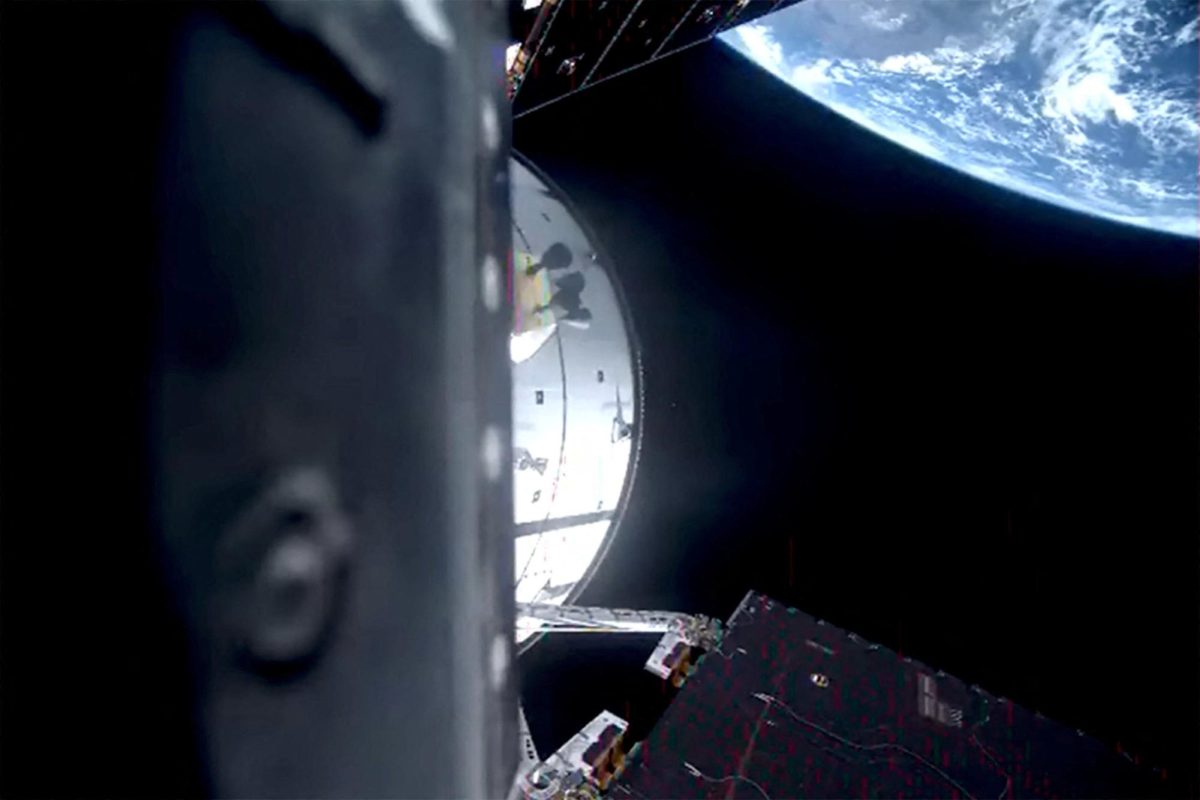


As NASA prepares for the next Artemis missions to the Moon, astronauts will soon travel farther from Earth than any humans have in over 50 years since the Apollo missions. Although propulsion systems, spacecraft materials, and mission planning have advanced significantly since the Apollo era, deep-space radiation, one of the greatest invisible threats to humans, remains largely unsolved.
“I think that radiation has been a big challenge to overcome for space travel, and it is something that will probably plague us more and more as we explore space, though we do have some solid options to deal with it as of now,” noted Jackson Barideaux ‘28, sharing his concern and optimism.
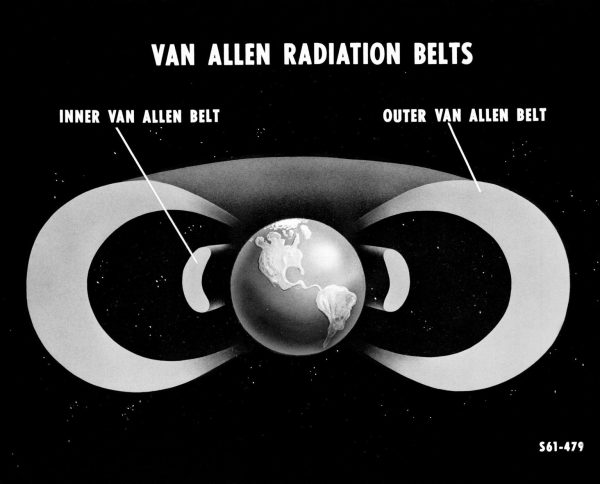
Astronauts aboard the International Space Station are protected by Earth’s magnetic field; however, Artemis crew members will pass through the Van Allen radiation belts and venture beyond Earth’s magnetosphere. The Van Allen radiation belt is a zone of energetic charged particles, most of which originate from the solar wind, that are captured by and held around a planet by that planet’s magnetosphere.
Our planet has two such belts, and sometimes additional belts may temporarily form during periods of intense solar activity. The belts are named after James Van Allen, who published an article describing them in 1958. Outside this natural shield, astronauts will be exposed to a constant stream of energetic particles known as galactic cosmic rays, in addition to unpredictable bursts of radiation from solar particle events.
https://airandspace.si.edu/multimedia-gallery/image/van-allen-belts-illustration696974jpg
Returning to the Moon and Beyond: The Radiation Challenge
Radiation in deep space behaves very differently from what we encounter here on Earth. High-energy particles traveling at nearly the speed of light can easily break chemical bonds inside our DNA and create unstable molecules called free radicals. As a result, cell signaling and immune system function are disrupted, increasing long-term risks of cancer and neurological damage in our bodies.
Even during short, planned 10-day lunar Artemis missions, astronauts may receive radiation doses comparable to a full-body CT scan, which would be manageable in the short term. However, the risk increases significantly for future long-duration missions to the Moon or to Mars, where astronauts may spend months or years at a time in deep space. Therefore, radiation is currently considered the primary biological limitation to long-distance human space exploration.
Propulsion Engineering as Radiation Protection
Radiation exposure in deep space is not only determined by how well astronauts are shielded, but also by how long they travel during those missions. This is where propulsion engineering becomes critical, as it is directly linked to astronaut health. The longer a spacecraft takes to travel between Earth and its destination, the more time astronauts are exposed to galactic cosmic rays and solar particle events. Current chemical propulsion systems require months to reach Mars, leaving crews continuously exposed to radiation outside Earth’s protective magnetosphere. However, the following next-generation propulsion technologies could dramatically reduce this risk:
- Nuclear Thermal Propulsion works by heating hydrogen propellant with a nuclear reactor rather than chemical combustion. These systems could potentially cut Mars transit times by 30–50%, significantly lowering cumulative radiation exposure.
- Solar Electric Propulsion systems produce lower thrust; however, their extremely high efficiency allows spacecraft to accelerate continuously over long durations, potentially enabling faster missions.
- Advanced, high-energy future propulsion methods, such as nuclear electric or fusion-based systems, could potentially shorten interplanetary travel even further, reducing astronaut radiation dose simply by limiting time spent in deep space.
In this way, propulsion system designs become a form of biological risk mitigation. Faster transit times mean less cumulative DNA damage, lower cancer risk, and reduced long-term neurological effects for astronauts on lunar and Mars missions.
Engineering Biology for Space Survival
Researchers also continue to explore new methods that move beyond traditional engineering solutions like spacecraft shielding. Some of the most innovative approaches include:
- Organ-on-chip technology: Artemis II is planned to carry tiny microfluidic devices containing astronaut-derived bone marrow cells to study how space radiation affects human immune systems in real time.
- Radioprotective supplements: Compounds such as kaempferol, a plant-derived antioxidant, are being tested for their ability to protect mitochondria from radiation-induced stress.
- Synthetic torpor (hibernation-like states): Slowing astronaut metabolism may reduce cellular damage and conserve energy during long missions, although safely inducing this state in humans remains a major challenge.
Scientists are studying proteins from radiation-resistant organisms like tardigrades, which produce a DNA-shielding compound called Damage Suppressor that can reduce radiation damage in human cells by up to 40% under laboratory conditions.
Shielding Is Not Enough
Traditional radiation shielding works effectively against solar storms, which consist mostly of lower-energy charged particles. Hydrogen-rich materials, such as water or specialized plastics, can absorb much of this radiation. However, galactic cosmic rays are significantly harder to stop. These high-mass, high-energy particles can penetrate most spacecraft materials. When they collide with structural atoms, they produce secondary radiation, which can worsen exposure.
To reduce exposure, mission planners often schedule launches during periods of increased solar activity, when the Sun’s magnetic field helps deflect incoming cosmic radiation from outside the solar system.
The Next Frontier of Human Exploration
In the past, Apollo astronauts experienced temporary visual flashes, likely caused by energetic particles passing through their retinas, and they showed slightly elevated rates of cataracts later in life. Despite that, most lived into their 80’s or 90’s without clear evidence of radiation-induced cancer, though long-term effects remain uncertain.
However, missions into deep space, like Mars, will be different and expose astronauts to chronic radiation for months or even years at a time, presenting risks that humans have never dealt with before. Solving this problem may require more than just a better spacecraft–it may require advances in both human biology and propulsion engineering.
As Pine Crest alumna Sydney Friedman ’22, a member of the senior class at Lafayette College who recently interned at Kennedy Space Center with a NASA primary contractor, emphasized, “It’s obvious that the Artemis missions are working towards scientific discovery and the exploration of ‘the new frontier,’ but our astronauts and their safety are also held paramount. When things feel overwhelming, the encouragement isn’t just to think of what will be learned from our hard work; it’s also to remember that there are lives on the line, and our job is to send them up and then bring them home safely. Learning more about deep space radiation as well as anything else that could happen out there is the least we can do; it’s not being done out of some general pursuit of knowledge, but rather to protect these astronauts and know that we are doing all we can for them.”
Understanding and overcoming the challenge of technological and biological limits of spaceflight may ultimately determine how far and how safely next generations of humans can explore our solar system and beyond.
Sources:
https://science.nasa.gov/biological-physical/stories/van-allen-belts/