


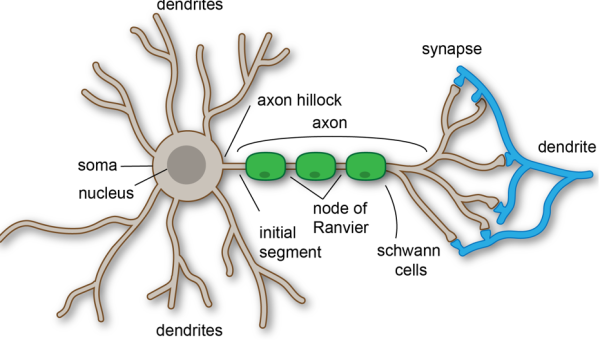
For over a century, neuroscientists have assumed that the brain’s communication system relies completely on synapses, the tiny links that transmit electrical and chemical signals between neurons. This long-standing knowledge of synapses has shaped how scientists studied thought, memory, and even the mental illnesses that affect millions of people today. However, researchers at Johns Hopkins University were surprised to discover a previously unknown form of neuronal connection that appears to bypass synapses by traveling through dendrites. Dendrites are tiny, tree-shaped fibers that spread out from a neuron’s cell body and function to collect information from nearby neurons and carry those incoming signals toward the cell body. Researchers called the newly discovered structures Dendritic Nanotubes (DNTs), which may significantly reshape and rewrite what we think about the brain and its hidden networks. “This discovery could be the first step to unlocking the mysteries of one of the most complicated and important systems in nature, the human brain,” Morgan Cole ‘28 explained, reflecting on the discovery’s potential impact.
Researchers have long known that certain cells are capable of forming nanotubes, as a research team in Germany in 2004 described tiny channels that formed spontaneously between rat kidney cells in a dish and allowed the transfer of organelles between them. Studies conducted since then have revealed that the so-called tunneling nanotubes in a variety of cell and tissue types have been linked to many body processes, including organ development, tissue repair, and the spread of viruses within the body.
Rethinking How the Brain Communicates
Decades later, the DNTs research team used high-resolution electron microscopes and advanced imaging. They discovered microscopic tubes only about 3 micrometers long and a few hundred nanometers thick, connecting the dendrites of neighboring neurons. Synapses typically transmit signals using neurotransmitters released into the synaptic cleft, whereas dendritic nanotubes appear to provide a direct, nonsynaptic route for both calcium signaling and the transfer of molecules such as small dyes and amyloid‑β between neurons. They conducted experiments and increased calcium levels in one neuron and noted that nearby neurons immediately showed the same change in calcium levels, suggesting that electrical charges were flowing through the nanotubes.
Amyloid-beta is a protein that is associated with Alzheimer’s disease, and intracellular amyloid accumulation is regarded to be an early sign of the terrible disease. Similar to calcium, the research team introduced this protein into one neuron in mouse cells. Consequently, they discovered that within a short time, the same protein also appeared in surrounding neurons, traveling through the nanotubes. However, when the researchers blocked nanotube formation using a special chemical, the protein transfer stopped. This finding suggests that DNTs might play a significant role in how diseases like Alzheimer’s spread and progress through the brain, which could open up breakthroughs for the understanding and treatment of many neurodegenerative disorders.
Ms. Jennifer Gordinier, Head of Science Research at Pine Crest, emphasized the significance of the finding: “Neuroscience, especially the study of neurodegenerative disease, is among the most complex fields in science. Discoveries like the intercellular nanotubes identified by Johns Hopkins researchers advance our understanding by revealing the cellular structures that enable proteins to transfer from one neuron to another. This new knowledge provides a potential mechanism to slow or halt the spread of disease-related proteins in the brain. Findings like these not only open new avenues for therapeutic intervention, but also deepen our grasp of how the brain communicates in truly remarkable ways.”
A Double-edged Discovery
An important challenge is the fact that DNTs are so small and short-lived that they are very difficult to detect, and researchers do not yet know how common they are or what causes them to form. For that reason, scientists are very excited but also cautious. Some experts believe DNTs may just be part of the brain’s normal communication system, but others caution that they may actually be linked to stress or disease. Regardless of how the new findings are viewed by the scientific community, they clearly challenge long-held assumptions about brain function and appear to represent a new form of direct, physical connection between neurons.
The Quest for Discovery Never Ends
“The idea that scientists are just now spotting DNTs after years of studying the brain is hard to wrap my head around. It makes me wonder what other hidden systems are waiting to be found,” explained Aviv Dobzinski ‘28, revealing his amazement of the recent discovery.
Even after many centuries of research, the brain still holds its secrets and surprises, and therefore, humanity needs to continue its research to find cures relentlessly. The discovery of DNTs may as well represent the next breakthrough in neuroscience, helping us understand not only how we think, but also how and why our brains change and sometimes fail us and loved ones prematurely at early ages. As one researcher described it, “Every once in a while, a surprise comes along.” DNTs may as well be a newly discovered, biggest surprise yet and as described a hidden highway running through the human mind, the most complex system in our known universe, yet for all its promise, this discovery after more than a century seems to be just a dent and one of many yet to come and an ongoing quest for future and aspiring scientists also to understand the human brain.
Sources
https://www.science.org/content/article/neurons-can-communicate-hidden-network-nanotubes-study-finds