



















































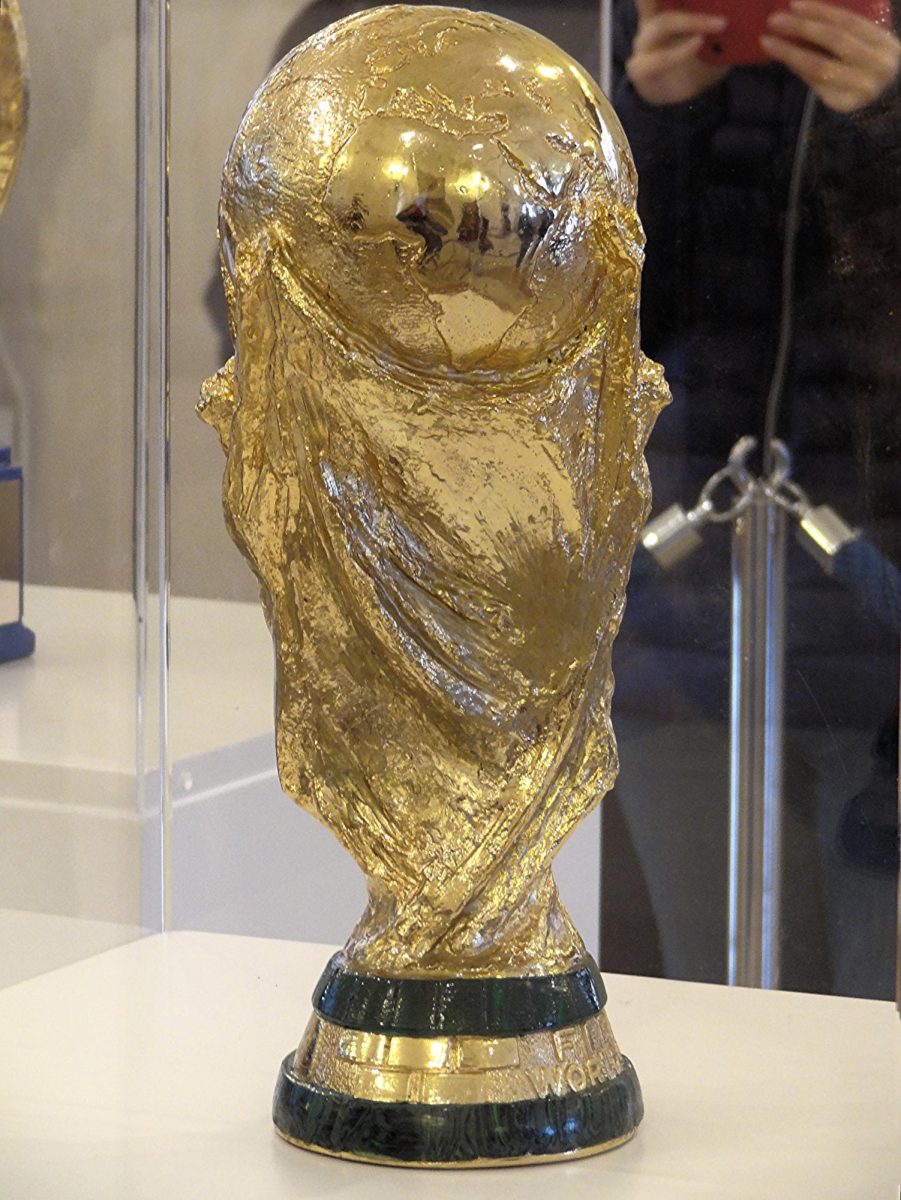
“O Joga Bonito,” or “the beautiful game,” of soccer has captivated audiences around the world since its establishment in 19th-century England. Of the many football competitions that have been created since, the FIFA World Cup stands out as not only the most prestigious to win, but also the most sought-after in terms of achieving soccer glory for oneself and one’s country. The tournament’s reputation stems from its cyclical status of only being hosted every four years, making it very hard for a professional player to say they have won. Apart from its periodic hosting, the event calls on countries from all over the world to send their best players to compete. Considering the aforementioned factors, it is universally deemed the hardest soccer tournament to win. Fortunately, 2026 is a competition year, and this year’s iteration is going to be unlike any other!
So, what makes this year’s World Cup so different from those of previous years? Well, first of all, there are huge changes to its structure. In years past, the FIFA World Cup allowed up to 32 teams to compete in what are known as “group stages”, small sections of four nations that have to compete against each other before they move on to the next round. In these group stages, the two nations that earn the most points out of the four, determined by most wins and ties, move on to the knockout stages, which are very similar to the playoff stages seen in U.S. sports. This year, however, the format has been heavily expanded.
This expansion marks arguably the most significant format overhaul ever in event history. Instead of 32 teams in contention, there are now 48 teams, meaning that there will be a lot more group stage blocs than those of World Cups past. Additionally, the layout of the knockout stages has also been altered. Rather than having the sixteen best nations move onto the elimination rounds, there will be twenty-four teams, made up of the two best nations of twelve groups, and an additional eight teams competing in a new “round of 32.” Going further, these supplemental eight teams will be chosen from the selection of third-place teams from the prior group stages. The eight teams that have the most points from this cohort will be selected to contend in the new round. Apart from an extra round early on and more included teams, the format of the tournament is practically the same, with the stakes being just as high as ever!
Aside from large changes to layout, 2026’s joust with the event is different from previous versions for many other reasons. Primarily, the aforementioned extensions to this year’s cup have given the floor to competition for many nations that had never been able to participate before. Moreover, the nations to debut in the 2026 World Cup are Cabo Verde, Curaçao, Jordan, and Uzbekistan. As of right now, there are 42 teams confirmed out of 48, meaning that there still could be a possibility of an additional six new teams making their debuts this June.
In addition to new changes and premieres, it will be the first time in over thirty years that the United States and North America host the FIFA World Cup. With this being said, it will also be the first time a World Cup is hosted in some of the world’s largest, most sophisticated sports stadiums, such as the Mercedes-Benz Stadium in Atlanta, Georgia, and MetLife Stadium in East Rutherford, New Jersey, the stadium that will hold the Final. With all these exciting distinctions, the demand to attend the FIFA World Cup is as high as it has ever been.
With limited tickets and an exorbitant amount of demand, the 2026 FIFA World Cup is also said to have the most expensive tickets in event history. In fact, ticket prices were said to have increased over 400% higher than inflation, causing enormous controversy and disappointment amongst fans. Acknowledging this, FIFA President Gianni Infantino blames hundreds of millions of ticket requests for just a few million tickets as the reason for substantial price increases. To make up for fans’ dissatisfaction, FIFA released “supporter entry tier tickets,” which are discounted tickets sold to known long-term fans of qualified national teams ahead of fixtures. These tickets make up around 10% of qualified teams’ tickets and will be sold at $60 each, which many view as a large improvement from the original prices, though many are still dissatisfied as they see the previously mentioned “supporter” clause as an unfair catch.
For Floridians seeking reasonably priced tickets, several of the tournament’s most exciting matches will take place in South Florida. As of right now, there are seven matches confirmed to be hosted in Miami. Of these seven, four of the games will feature the likes of Saudi Arabia, Uruguay, Cape Verde, Scotland, Brazil, Colombia, and Portugal. The last three games will include a match for the Round of 32, a Quarterfinal, and the Third Place Final. With this in mind, there is a sure chance that the Pine Crest community will be in attendance!
Speaking of the Pine Crest community, there are varying opinions about who to root for this summer. Notably, France is a very popular favorite amongst both Pine Crest students and faculty. Students Daniel Rais ‘26, Raphael Armand-Blumberg ‘29, and Andrew Mints ‘29 are key examples of this, as they all favor France to win, citing starting forward Kylian Mbappé as the French difference maker. In addition, faculty members Dr. Stewart, from the English department, and Mr. Herpers, from the Social Science department, will also be rooting for France as they have personal family connections to the country.
Whilst France seems to be a strong favorite and expected contender, Dr. Hibbs, from the Social Science department and PC Athletics, holds a distinct opinion of wanting an underdog to win the Final. The same could be said for both Parker Hancock ‘26 and Mr. Lowe, from the Math Department, who will be cheering on the U.S. Men’s National Team, a team that is prone to early exits in the contest.
Factoring in previously mentioned expectations and pondering upon this year’s innovative changes, it could be said that the excitement for summer’s World Cup is as high as ever. Yet, the legacy of this year’s tournament will not be truly known until the last whistle of a fateful July afternoon.
Sources: